

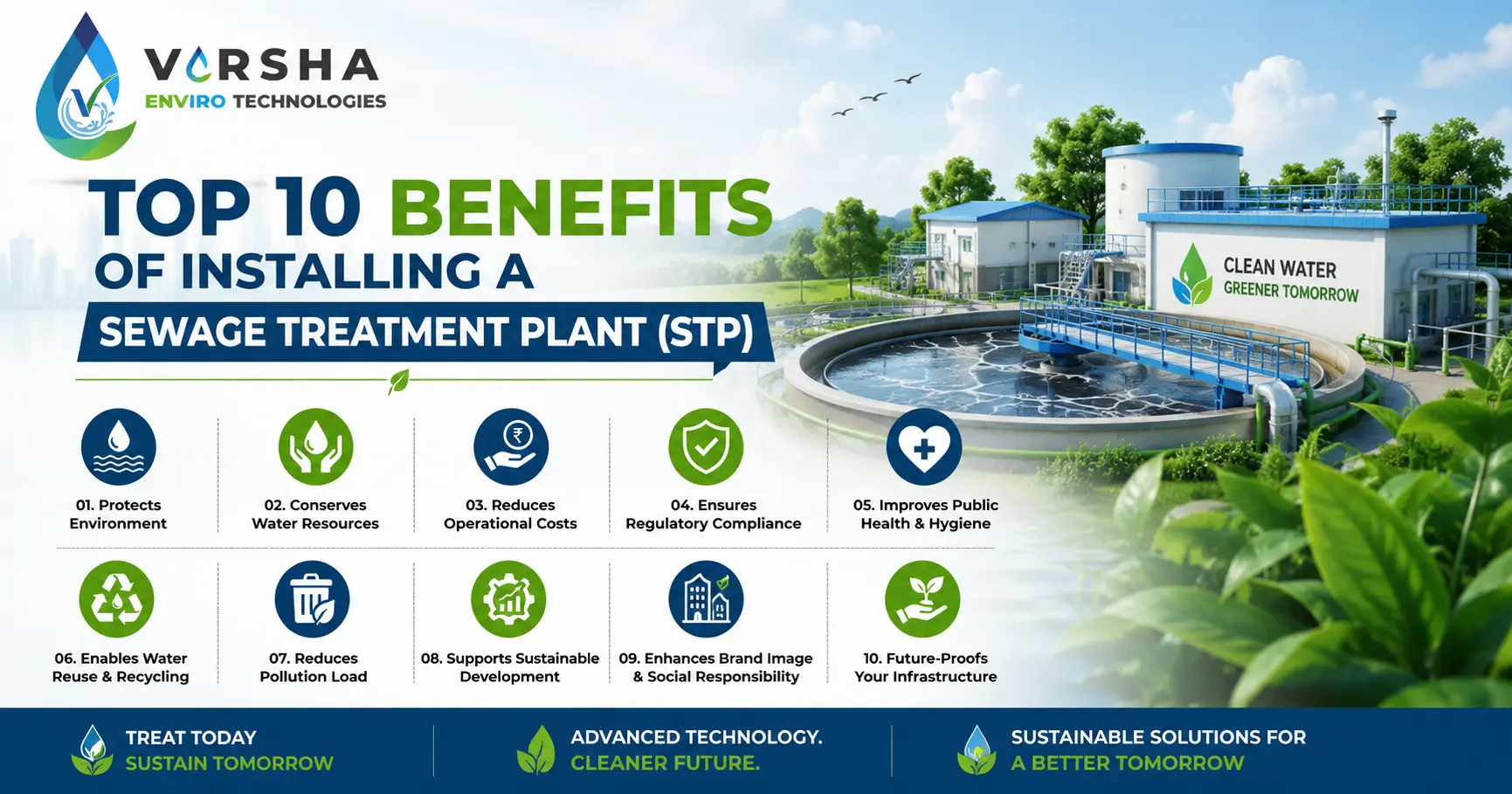
Top 10 Benefits of Installing a Sewage Treatment Plant (STP)
Water is one of the world’s most valuable resources. Yet, every day, homes, apartments, hotels, hospitals, offices, and industries generate large amounts of wastewater. If this sewage is not treated properly, it can contaminate rivers, lakes, groundwater, and the surrounding environment.
This is why Sewage Treatment Plants (STPs) have become essential for modern infrastructure. Whether you manage a residential complex, commercial building, industrial facility, educational institution, or hospitality property, installing an STP is no longer just about compliance—it is about sustainability, cost savings, and responsible water management.
As environmental regulations become stricter and water scarcity continues to affect many regions, organizations are increasingly investing in wastewater treatment solutions. A well-designed STP helps convert wastewater into reusable water, reducing both environmental impact and operating costs.
Companies like Varsha Enviro Technologies (https://varshaenviro.com/) are helping businesses, residential projects, and institutions implement efficient sewage treatment solutions that support long-term sustainability and regulatory compliance.
In this comprehensive guide, we’ll explore the top 10 benefits of installing an STP, explain how these systems work, and discuss why they are becoming a critical investment in 2026 and beyond.
What Is a Sewage Treatment Plant (STP)?
An STP is a wastewater treatment system designed to treat domestic sewage generated from:
- Residential apartments
- Housing societies
- Hotels and resorts
- Office complexes
- Educational institutions
- Hospitals
- Commercial facilities
The primary objective of an STP is to remove contaminants, organic matter, suspended solids, and harmful microorganisms from wastewater before it is discharged or reused.
Modern STPs use advanced treatment technologies such as:
- MBBR (Moving Bed Biofilm Reactor)
- SBR (Sequencing Batch Reactor)
- MBR (Membrane Bioreactor)
- Activated Sludge Process
These technologies help produce treated water suitable for non-potable reuse applications such as gardening, flushing, cooling towers, and landscaping.
Learn more about STP solutions here:
STP – https://varshaenviro.com/sewage-treatment-plant-stp/
Why STPs Are More Important Than Ever in 2026
Several factors are driving the demand for sewage treatment plants:
- Rising water scarcity
- Increasing urbanization
- Stricter pollution control regulations
- Growing focus on sustainability
- Higher water procurement costs
Organizations that fail to manage wastewater properly may face regulatory penalties, reputational damage, and increased operating expenses.
Installing an STP provides a practical solution to all these challenges.
Benefit #1: Significant Water Conservation
One of the biggest advantages of an STP is water conservation.
Rather than allowing wastewater to go to waste, treated sewage can be reused for various applications, reducing the demand for freshwater resources.
Common reuse applications include:
- Landscape irrigation
- Toilet flushing
- Cooling tower makeup water
- Road cleaning
- Construction activities
In many facilities, treated water can replace 40–60% of freshwater consumption.
This not only conserves water but also supports long-term sustainability goals.
Benefit #2: Lower Water and Utility Costs
Water costs continue to rise across cities and industrial regions.
Organizations relying heavily on tanker water, municipal supply, or groundwater extraction often face substantial monthly expenses.
By reusing treated wastewater, facilities can:
- Reduce freshwater purchases
- Lower tanker dependency
- Decrease water utility bills
- Improve resource efficiency
Over time, these savings can significantly offset the initial investment in an STP.
Benefit #3: Compliance with Environmental Regulations
Environmental authorities have become increasingly strict regarding wastewater management.
Many states and municipalities require:
- Sewage treatment facilities
- Water recycling measures
- Proper wastewater disposal systems
An STP helps organizations comply with:
- CPCB guidelines
- State Pollution Control Board regulations
- Local municipal requirements
Compliance reduces the risk of:
- Fines
- Legal complications
- Operational disruptions
Benefit #4: Reduced Environmental Pollution
Untreated sewage can seriously harm the environment.
When wastewater enters rivers, lakes, or soil without treatment, it can:
- Pollute water bodies
- Harm aquatic life
- Contaminate groundwater
- Create foul odors
STPs help prevent these issues by removing pollutants before discharge or reuse.
As a result, organizations contribute to cleaner ecosystems and healthier communities.
Benefit #5: Sustainable Water Reuse Opportunities
Modern STPs are designed to maximize water recovery.
Instead of viewing wastewater as a waste product, organizations can transform it into a reusable resource.
Treated water can support:
- Gardens and green spaces
- Landscape maintenance
- Cooling systems
- Utility operations
This circular approach to water management improves resource efficiency and supports sustainable development.
Benefit #6: Improved Public Health and Hygiene
Improper sewage disposal can lead to:
- Waterborne diseases
- Unpleasant odors
- Mosquito breeding
- Unsanitary conditions
A properly functioning STP helps eliminate harmful pathogens and contaminants.
This creates a healthier environment for:
- Residents
- Employees
- Guests
- Students
- Patients
Public health protection is one of the most important yet often overlooked benefits of wastewater treatment.
Benefit #7: Enhanced Property Value and Brand Reputation
Sustainability has become a major factor in purchasing and investment decisions.
Properties equipped with advanced environmental infrastructure often enjoy:
- Higher market value
- Better occupancy rates
- Improved investor confidence
Businesses that prioritize environmental responsibility also strengthen their brand reputation.
Customers, investors, and stakeholders increasingly prefer organizations that demonstrate sustainable practices.
Benefit #8: Reduced Dependence on Freshwater Sources
Many regions face groundwater depletion and inconsistent municipal water supply.
An STP helps reduce reliance on:
- Borewells
- Municipal water
- Water tankers
This improves water security and ensures greater operational stability.
Organizations become less vulnerable to water shortages and supply disruptions.
Benefit #9: Support for ESG and Sustainability Goals
Environmental, Social, and Governance (ESG) initiatives have become a major priority for businesses worldwide.
Wastewater treatment contributes directly to environmental sustainability by:
- Conserving water
- Reducing pollution
- Supporting resource recovery
- Lowering environmental impact
Organizations with strong sustainability practices often gain competitive advantages in the marketplace.
Benefit #10: Long-Term Return on Investment
While installing an STP requires capital investment, the long-term financial benefits can be substantial.
Savings come from:
- Reduced water purchases
- Lower wastewater disposal costs
- Improved regulatory compliance
- Reduced environmental liabilities
Many organizations achieve a favorable return on investment within a few years of implementation.
The long-term value often exceeds the initial installation cost.
Real-World Applications of STPs Across Industries
Residential Apartments
Large housing societies use STPs to recycle water for gardening and flushing, reducing dependence on tanker water.
Hotels and Resorts
Hospitality facilities use treated water for landscaping, helping lower operating costs while promoting eco-friendly operations.
Hospitals
Healthcare facilities require reliable wastewater treatment to maintain hygiene standards and environmental compliance.
Educational Institutions
Schools and universities use STPs to manage wastewater responsibly while supporting sustainability initiatives.
Commercial Complexes
Office parks and business centers benefit from water reuse and reduced utility expenses.
How to Choose the Right STP for Your Facility
Selecting the right STP depends on several factors:
Daily Wastewater Volume
Determine the amount of sewage generated daily.
Available Space
Choose a system that fits your site’s physical constraints.
Water Reuse Requirements
Define how treated water will be reused.
Technology Selection
Compare technologies such as:
- MBBR
- SBR
- MBR
Maintenance Requirements
Consider long-term operation and maintenance needs.
Working with experienced solution providers can help ensure optimal system performance.
Frequently Asked Questions About STPs
What is the main purpose of an STP?
The main purpose of an STP is to treat sewage and produce water that can be safely discharged or reused.
Is treated STP water safe for reuse?
Yes. Treated water can be used for gardening, flushing, landscaping, and various non-potable applications.
Is an STP mandatory?
In many jurisdictions, large residential, commercial, and institutional projects are required to install STPs.
How much water can an STP save?
Many facilities can reduce freshwater consumption by 40–60% through treated water reuse.
What industries benefit from STPs?
Hotels, hospitals, apartments, educational institutions, commercial buildings, and industrial facilities all benefit from sewage treatment plants.
Conclusion
A Sewage Treatment Plant is no longer just an environmental requirement—it is a smart investment for the future.
From water conservation and cost savings to regulatory compliance and sustainability, the benefits of installing an STP extend far beyond wastewater treatment.
As water resources become increasingly valuable, organizations that invest in efficient sewage treatment systems will be better positioned to reduce costs, protect the environment, and meet future regulatory requirements.
Whether you operate a residential complex, commercial property, hotel, hospital, or industrial facility, implementing an STP can deliver measurable environmental and financial benefits for years to come.
The future of water management is not just about treating wastewater—it is about transforming it into a valuable resource.
Ready to Improve Your Water Management Strategy?
If you found this guide helpful:
✅ Share it with your colleagues and industry network
💬 Leave a comment with your questions about STP systems
📚 Explore more articles on wastewater treatment, water recycling, and sustainable infrastructure
Together, we can create a cleaner, greener, and more water-secure future.