
Complete Industrial Guide for 2026
Water is one of the most valuable resources for industries. But with rising water scarcity, stricter environmental laws, and increasing operational costs, industries are now shifting toward smarter water management systems.
One of the most advanced and sustainable wastewater treatment solutions today is Zero Liquid Discharge (ZLD).
Industries across textile, chemical, pharmaceutical, food processing, and power sectors are rapidly adopting ZLD systems to:
- Reduce wastewater discharge
- Recycle water efficiently
- Meet pollution control norms
- Save long-term operational costs
But what exactly is Zero Liquid Discharge? How does it work? And why is it becoming essential in 2026?
In this complete guide, we’ll explain everything in simple language.
What Is Zero Liquid Discharge (ZLD)?
Zero Liquid Discharge (ZLD) is an advanced wastewater treatment process where no liquid waste leaves the industrial facility.
Instead of discharging wastewater into the environment, the system:
- Treats wastewater
- Recovers reusable water
- Converts remaining waste into solid residue
In simple words:
ZLD ensures that industries recycle almost all wastewater and discharge zero liquid outside the plant.
This makes it one of the most environmentally friendly wastewater management solutions available today.
Why Is ZLD Important in 2026?
Water scarcity and environmental regulations are becoming stricter every year.
Many industries consume thousands or even millions of liters of water daily. Without proper treatment, this wastewater can seriously harm:
- Rivers
- Groundwater
- Soil quality
- Public health
Governments and pollution control boards are now encouraging or mandating ZLD systems in high-pollution industries.
Main Objectives of a ZLD System
A Zero Liquid Discharge system is designed to:
✅ Recover maximum water for reuse
✅ Minimize wastewater discharge
✅ Reduce environmental pollution
✅ Recover useful salts and byproducts
✅ Achieve pollution control compliance
How Does a ZLD System Work?
A ZLD system uses multiple treatment stages to recover reusable water and eliminate liquid discharge.
Step-by-Step ZLD Process
1. Preliminary Treatment
Wastewater first passes through:
- Screening systems
- Oil & grease removal
- Equalization tanks
This removes large particles and balances flow.
2. Primary & Secondary Treatment
Chemical and biological treatment removes:
- Suspended solids
- Organic matter
- Toxic contaminants
Technologies used may include:
- ETP systems
- Biological reactors
- Clarifiers
3. Membrane Filtration
Advanced membrane systems like:
- Ultrafiltration (UF)
- Reverse Osmosis (RO)
separate clean water from dissolved contaminants.
Most reusable water is recovered at this stage.
4. Evaporation Process
The remaining concentrated wastewater is sent to:
- Multiple Effect Evaporators (MEE)
- Mechanical Vapor Recompression (MVR) systems
These systems evaporate water and recover additional reusable water.
5. Crystallization
Finally, the leftover concentrated slurry is converted into:
- Solid salts
- Dry waste residue
This solid waste can then be safely disposed of or reused in some industries.
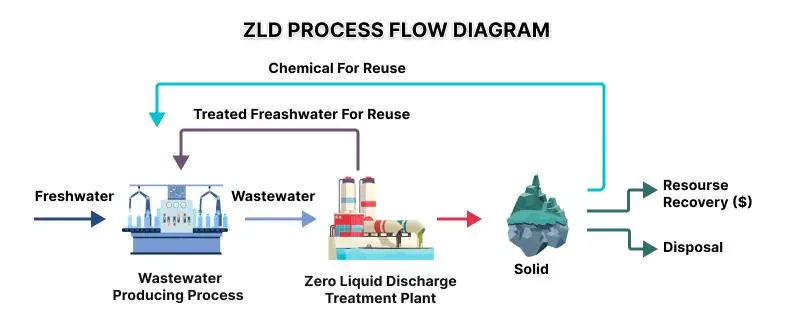
Simple Flow of ZLD System
Wastewater → Treatment → RO/UF → Evaporation → Crystallization → Reuse + Solid Waste
Industries That Need ZLD Systems
Zero Liquid Discharge is commonly used in industries that generate highly polluted wastewater.
Textile Industry
Textile dyeing units produce:
- Color chemicals
- High TDS wastewater
- Toxic dyes
ZLD helps recycle water and reduce pollution.
Pharmaceutical Industry
Pharma industries generate complex wastewater containing:
- Chemical residues
- Organic compounds
- Solvents
ZLD ensures safe treatment and reuse.
Chemical Industries
Chemical manufacturing plants often use ZLD to comply with environmental regulations.
Food Processing Units
Food industries use ZLD for:
- Water conservation
- Sustainable production
- Reduced wastewater discharge
Power Plants
Thermal power plants use large volumes of water for cooling and operations. ZLD helps reduce freshwater dependency.
Benefits of Zero Liquid Discharge
1. Maximum Water Recovery
One of the biggest advantages of ZLD is high water recovery.
Industries can recover:
- 90–95% of wastewater
- Reuse treated water internally
This significantly reduces freshwater consumption.
2. Environmental Protection
ZLD prevents harmful wastewater from entering:
- Rivers
- Lakes
- Groundwater
This protects ecosystems and public health.
3. Compliance with Pollution Control Norms
Many pollution control boards now require strict wastewater management.
ZLD helps industries:
- Avoid legal penalties
- Meet environmental regulations
- Maintain operational approvals
4. Long-Term Cost Savings
Although ZLD systems require investment, they help industries save money by:
- Reducing water purchase costs
- Lowering wastewater disposal expenses
- Reusing treated water
Over time, industries can significantly reduce operational costs.
5. Sustainable Industrial Operations
ZLD supports:
- ESG goals
- Green manufacturing
- Sustainable production practices
This improves corporate image and investor confidence.
Technologies Used in ZLD Systems
Modern ZLD plants use advanced technologies for efficient treatment and recovery.
Reverse Osmosis (RO)
RO systems recover reusable water by removing dissolved contaminants.
Ultrafiltration (UF)
UF protects RO membranes and improves treatment quality.
Multiple Effect Evaporator (MEE)
MEE systems evaporate wastewater efficiently while reducing energy consumption.
Mechanical Vapor Recompression (MVR)
MVR technology improves evaporation efficiency and lowers operational costs.
Crystallizers
Crystallizers convert concentrated wastewater into solid waste.
Challenges of ZLD Systems
While ZLD offers many benefits, industries should also understand its challenges.
High Initial Investment
ZLD systems involve advanced technologies, making installation costs higher than conventional treatment systems.
Energy Consumption
Evaporation processes require significant energy.
However, modern energy-efficient systems are reducing operational costs.
Skilled Operation Required
ZLD plants require:
- Proper monitoring
- Skilled operators
- Regular maintenance
Real-Life Example of ZLD Implementation
A textile manufacturing company faced heavy penalties due to wastewater discharge issues.
After implementing a ZLD system:
- 95% water was recycled
- Freshwater dependency reduced drastically
- Pollution compliance improved
- Water costs reduced significantly
The company also improved its sustainability profile.
ZLD vs Conventional Wastewater Treatment
| Feature | Conventional Treatment | ZLD |
|---|---|---|
| Water Recovery | Partial | Maximum |
| Liquid Discharge | Yes | No |
| Environmental Impact | Moderate | Very low |
| Operational Cost Savings | Limited | High |
| Compliance Level | Basic | Advanced |
Future of ZLD in India
India is moving rapidly toward sustainable water management.
In coming years, ZLD adoption will increase because of:
- Water scarcity
- Strict environmental laws
- Industrial sustainability goals
- Rising water costs
Industries that adopt ZLD early will gain a competitive advantage.
People Also Ask (PAA)
What is Zero Liquid Discharge?
Zero Liquid Discharge (ZLD) is a wastewater treatment process where all wastewater is treated and reused, leaving zero liquid waste discharge.
Which industries need ZLD systems?
Industries such as textile, chemical, pharmaceutical, food processing, and power plants commonly use ZLD systems.
Is ZLD mandatory in India?
In many high-pollution industries and industrial zones, pollution control boards strongly encourage or mandate ZLD systems.
What are the benefits of ZLD?
ZLD helps:
- Recycle water
- Reduce pollution
- Save water costs
- Achieve environmental compliance
Is ZLD expensive?
ZLD systems require higher initial investment, but long-term water savings and compliance benefits make them cost-effective.
Choosing the Right ZLD Solution Provider
A successful ZLD project depends on:
- Proper wastewater analysis
- Customized system design
- Reliable technology
- Long-term maintenance support
Companies like
👉 Varsha Enviro Technologies
provide advanced wastewater treatment and recycling solutions tailored to industrial needs.
Conclusion
Zero Liquid Discharge (ZLD) is no longer just an advanced environmental solution—it is becoming a necessity for industries in 2026.
By recycling wastewater and eliminating liquid discharge, ZLD systems help industries:
- Save water
- Reduce operational costs
- Protect the environment
- Achieve pollution control compliance
As industries move toward sustainability and smarter resource management, ZLD will play a major role in shaping the future of industrial wastewater treatment.