

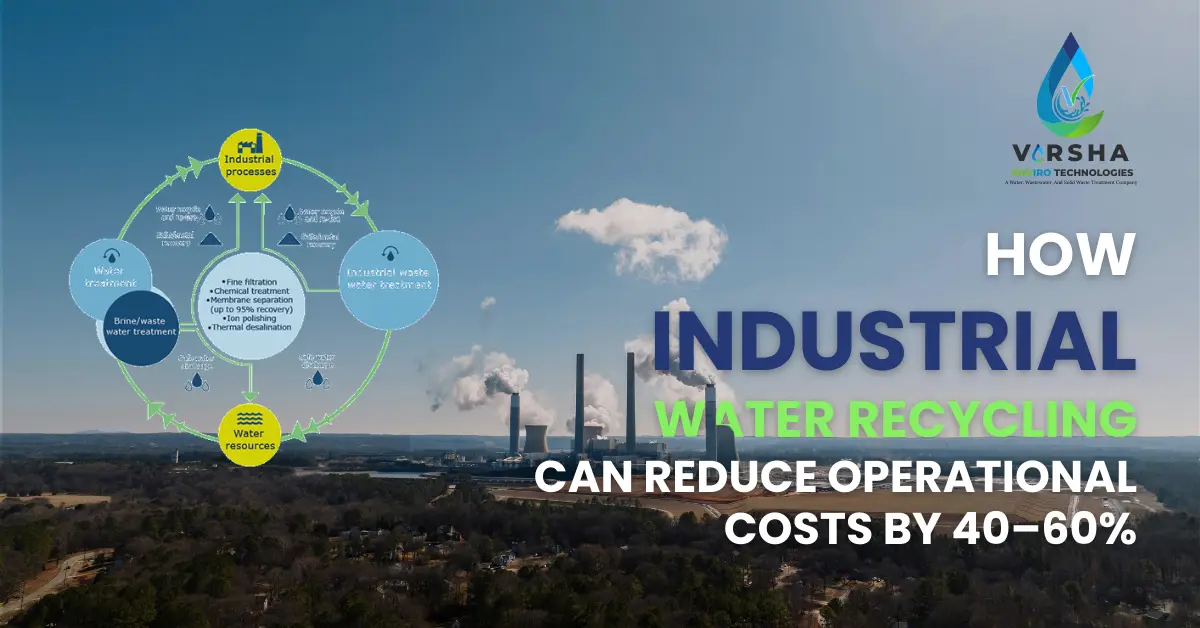
Water is one of the most important resources for modern industries. From manufacturing plants to food processing facilities, almost every industrial operation relies heavily on water. However, rising water costs, environmental regulations, and increasing scarcity have forced industries to rethink how they use and manage water.
This is where industrial water recycling becomes a game-changer.
Instead of discharging wastewater after a single use, industries can treat and reuse water multiple times, significantly reducing operating costs. In many cases, businesses have reported 40–60% cost reductions after implementing advanced recycling systems.
In this guide, we’ll explore how industrial water recycling works, why it’s becoming essential in 2026, and how businesses can adopt this strategy to save money while protecting the environment.
What Is Industrial Water Recycling?
Industrial water recycling is the process of treating wastewater so it can be reused within the facility instead of being discharged.
This process typically involves:
- Wastewater collection
- Physical, chemical, and biological treatment
- Advanced filtration systems
- Reuse in production or utilities
Recycled water can then be used for:
- Cooling towers
- Boiler feedwater
- Washing and cleaning operations
- Process water
- Landscaping and utility applications
Industries achieve this using systems like a Wastewater Treatment Plant.
You can explore detailed solutions here:
👉 Wastewater Treatment Plant
Why Industrial Water Recycling Is Critical in 2026
Water scarcity is becoming a serious issue worldwide. Industries that rely heavily on water must adopt sustainable solutions to maintain long-term operations.
Here are some major reasons why companies are investing in water recycling.
1. Rising Water Costs
Freshwater prices continue to increase due to demand and limited supply.
Recycling water reduces the need for external water sources like:
- Municipal supply
- Borewell extraction
- Water tankers
2. Strict Environmental Regulations
Governments and pollution control boards require industries to treat wastewater before discharge.
Recycling systems help industries stay compliant with environmental laws.
3. Sustainability Goals
Many companies are adopting ESG (Environmental, Social, and Governance) strategies. Water recycling supports sustainability commitments and corporate responsibility.
How Water Recycling Reduces Operational Costs by 40–60%
Many industries underestimate the real cost of water. Operational costs include more than just the purchase of water.
Let’s break down how recycling significantly lowers expenses.
1. Reduced Freshwater Procurement
Industries often depend on:
- Tanker water
- Municipal supply
- Groundwater extraction
When wastewater is recycled, companies reduce their dependence on these sources.
For example:
A factory using 200,000 liters of water daily may reduce consumption to 80,000–120,000 liters after recycling implementation.
That translates into massive annual savings.
2. Lower Wastewater Disposal Costs
Discharging wastewater can be expensive due to:
- Transportation costs
- Disposal fees
- Environmental compliance costs
Recycling reduces the volume of wastewater discharged, which significantly lowers disposal expenses.
3. Reduced Energy Costs
Modern recycling technologies use energy-efficient systems like:
- Membrane filtration
- Advanced oxidation
- Smart automation
These systems optimize energy consumption while maintaining high treatment efficiency.
4. Reduced Water Transportation Costs
Many industries rely on tanker water deliveries.
Water recycling minimizes tanker usage, reducing:
- Fuel expenses
- Logistics costs
- Operational delays
5. Avoidance of Regulatory Penalties
Environmental violations can lead to:
- Heavy fines
- Production shutdowns
- Legal complications
Recycling wastewater helps industries comply with regulations, avoiding costly penalties.
Key Technologies Used in Industrial Water Recycling
Modern recycling systems use a combination of advanced technologies.
Membrane Filtration
Membrane systems such as:
- Ultrafiltration (UF)
- Reverse Osmosis (RO)
remove microscopic contaminants and produce high-quality treated water.
Biological Treatment
Microorganisms break down organic waste in wastewater.
Common biological processes include:
- MBBR (Moving Bed Biofilm Reactor)
- SBR (Sequencing Batch Reactor)
- MBR (Membrane Bioreactor)
Advanced Oxidation Processes
These processes remove stubborn contaminants using chemical reactions.
They are particularly useful for industries like:
- Pharmaceuticals
- Chemical manufacturing
- Textile dyeing
Zero Liquid Discharge (ZLD)
Some industries adopt Zero Liquid Discharge systems, where:
- All wastewater is treated
- Water is reused internally
- No discharge leaves the facility
ZLD systems maximize water savings and environmental compliance.
Real-Life Industrial Water Recycling Examples
Understanding real-world applications makes the benefits clearer.
Textile Industry
Textile dyeing units consume large volumes of water.
After installing recycling systems, many textile plants reuse water for:
- Dyeing processes
- Washing operations
Some textile factories report up to 50% reduction in water costs.
Pharmaceutical Industry
Pharmaceutical plants generate complex wastewater.
Advanced recycling systems help them:
- Reuse treated water for cooling systems
- Reduce freshwater intake
- Meet strict regulatory standards
Food Processing Industry
Food processing plants use large volumes of water for cleaning and processing.
Recycled water can be reused for:
- Equipment washing
- Utility operations
- Cooling systems
This leads to major cost savings.
Power Plants
Thermal power plants require significant water for cooling.
Water recycling allows plants to reuse treated water in cooling towers, reducing freshwater usage dramatically.
Industries That Benefit Most from Water Recycling
Industrial water recycling is particularly beneficial for industries with high water consumption.
These include:
- Textile manufacturing
- Chemical industries
- Pharmaceutical plants
- Food and beverage processing
- Paper and pulp industries
- Power plants
- Automotive manufacturing
In these sectors, recycling can dramatically reduce operational costs.
Steps to Implement Industrial Water Recycling
Industries planning to adopt water recycling should follow a structured approach.
Step 1: Water Audit
A water audit helps analyze:
- Water consumption patterns
- Wastewater generation
- Potential reuse opportunities
Step 2: Wastewater Analysis
Testing wastewater quality determines the appropriate treatment technologies required.
Key parameters include:
- BOD
- COD
- TSS
- pH levels
Step 3: System Design
Treatment plants must be customized based on the industry’s needs.
Engineering experts design systems to maximize water reuse.
Reliable solution providers like
👉 Varsha Enviro Technologies
offer tailored wastewater recycling solutions for industries.
Step 4: Installation and Monitoring
Once installed, treatment systems require proper monitoring to ensure consistent performance.
Automation tools help track:
- Water quality
- Treatment efficiency
- System performance
Environmental Benefits of Water Recycling
In addition to cost savings, water recycling offers major environmental advantages.
Reduced Water Scarcity
Recycling reduces demand for freshwater resources.
This helps conserve:
- Rivers
- Lakes
- Groundwater reserves
Reduced Pollution
Treating wastewater prevents harmful chemicals from entering natural ecosystems.
This protects aquatic life and biodiversity.
Sustainable Industrial Growth
Industries adopting recycling technologies contribute to long-term environmental sustainability.
Common Challenges in Industrial Water Recycling
Despite its benefits, some industries hesitate to adopt recycling systems due to perceived challenges.
Initial Investment
Installing treatment systems requires upfront capital.
However, the long-term cost savings often outweigh the initial investment.
Maintenance Requirements
Treatment plants require proper maintenance and monitoring.
Partnering with experienced engineering providers ensures reliable system performance.
Technical Expertise
Industrial water treatment involves specialized technologies.
Working with experts ensures proper system design and operation.
People Also Ask (PAA)
What is industrial water recycling?
Industrial water recycling is the process of treating wastewater so it can be reused within industrial operations, reducing freshwater consumption and operational costs.
How much money can industries save with water recycling?
Industries can reduce operational costs by 40–60% by lowering water procurement, disposal, and regulatory compliance expenses.
Which industries benefit most from water recycling?
Industries such as textile manufacturing, pharmaceuticals, chemical processing, food production, and power plants benefit significantly from water recycling systems.
Is industrial water recycling expensive?
Although the initial setup requires investment, the long-term savings on water and compliance costs make recycling highly cost-effective.
Can recycled water be reused in production?
Yes. Recycled water can be reused for many applications such as cooling systems, cleaning processes, landscaping, and certain manufacturing operations.
Future of Industrial Water Recycling
The future of water management lies in smart recycling technologies.
Key trends expected in the coming years include:
- AI-powered monitoring systems
- Energy-efficient treatment plants
- Increased adoption of Zero Liquid Discharge systems
- Stricter environmental regulations
Industries that adopt recycling today will be better prepared for the challenges of tomorrow.
Conclusion
Industrial water recycling is no longer just an environmental initiative—it is a strategic business decision.
By treating and reusing wastewater, industries can:
- Reduce operational costs by 40–60%
- Minimize environmental impact
- Ensure regulatory compliance
- Improve long-term sustainability
With advanced treatment technologies and customized engineering solutions, companies can transform wastewater into a valuable resource.
Engineering partners like Varsha Enviro Technologies help industries design efficient recycling systems that maximize savings while protecting the environment.