

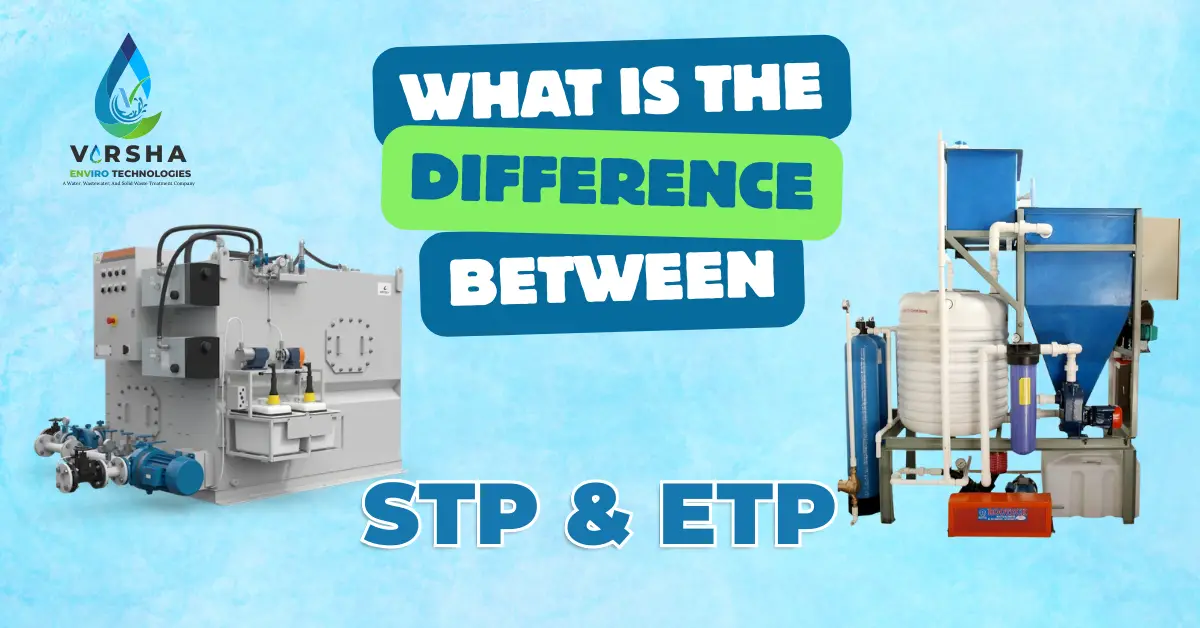
Complete Guide for Industries (2026)
Water management has become one of the biggest challenges for industries, commercial spaces, and municipalities. With strict environmental regulations and rising water scarcity, companies can no longer discharge untreated wastewater into the environment.
That’s where wastewater treatment systems come into play. Two of the most common systems used across industries are STP (Sewage Treatment Plant) and ETP (Effluent Treatment Plant).
But many business owners, facility managers, and project planners often ask:
- What is the difference between STP and ETP?
- Which one does my industry need?
- Can treated water be reused?
- Are STPs or ETPs mandatory for industries?
In this complete industry guide, we’ll break down the differences between STP and ETP in simple terms, explain how each system works, and help you decide which solution fits your needs.
We’ll also explore real-world examples and industry applications to give you a practical understanding.
What Is an STP (Sewage Treatment Plant)?
An STP is designed to treat domestic sewage or wastewater generated from human activities.
This includes water coming from:
- Toilets
- Bathrooms
- Kitchens
- Laundry
- Residential buildings
- Hotels and offices
The main goal of an STP is to remove organic waste, bacteria, and suspended solids so the water can be safely discharged or reused.
For detailed STP solutions, you can explore:
👉 STP
How an STP Works (Simple Process)
Most modern STPs follow three main treatment stages:
1. Primary Treatment
In this stage:
- Large particles are removed
- Oils and grease are separated
- Sedimentation tanks settle heavier solids
2. Biological Treatment
Microorganisms break down organic waste.
Common technologies used include:
- MBBR (Moving Bed Biofilm Reactor)
- SBR (Sequencing Batch Reactor)
- MBR (Membrane Bioreactor)
These technologies help reduce BOD and COD levels significantly.
3. Tertiary Treatment
The final stage improves water quality through:
- Filtration
- Disinfection (UV / chlorine)
- Polishing filters
After this process, treated water can be reused for:
- Gardening
- Toilet flushing
- Cooling towers
- Landscaping
What Is an ETP (Effluent Treatment Plant)?
An ETP treats industrial wastewater, also known as effluent.
Industrial wastewater is very different from domestic sewage because it may contain:
- Toxic chemicals
- Heavy metals
- Oils and grease
- Acids and alkalis
- Synthetic compounds
Because of this, ETP systems are more complex and customized.
You can explore complete industrial solutions here:
👉 ETP
How an ETP Works
An Effluent Treatment Plant uses multiple treatment stages to remove industrial contaminants.
1. Preliminary Treatment
This stage removes large debris and adjusts pH levels.
Typical steps include:
- Screening
- Equalization tanks
- Neutralization
2. Primary Treatment
Chemical processes remove suspended solids.
Techniques include:
- Coagulation
- Flocculation
- Sedimentation
3. Secondary Treatment
Biological treatment reduces organic pollutants using bacteria.
4. Tertiary Treatment
Advanced processes improve water quality further.
Examples:
- Activated carbon filters
- Reverse osmosis
- Advanced oxidation processes
This treated water may be:
- Reused in production
- Sent for further polishing
- Discharged safely according to pollution control norms
STP vs ETP: Key Differences Explained
Here is a clear comparison that industries can easily understand.
| Feature | STP | ETP |
|---|---|---|
| Full Form | Sewage Treatment Plant | Effluent Treatment Plant |
| Wastewater Source | Domestic sewage | Industrial wastewater |
| Common Locations | Housing societies, hotels, offices | Factories, chemical plants |
| Treatment Complexity | Moderate | High |
| Chemicals Used | Minimal | Often required |
| Pollutants | Organic matter | Chemicals, metals, toxins |
| Cost | Lower | Higher |
| Operation | Simpler | Requires specialized monitoring |
In simple words:
STP treats human sewage, while ETP treats industrial waste.
Why Industries Must Install STP or ETP
Environmental regulations have become much stricter in recent years.
Pollution control boards require industries to treat wastewater before discharge.
Here’s why treatment plants are essential:
Environmental Protection
Untreated wastewater contaminates:
- Rivers
- Groundwater
- Soil ecosystems
Legal Compliance
Industries must comply with pollution control regulations.
Failure can lead to:
- Heavy penalties
- Operational shutdowns
- Legal action
Water Reuse & Cost Savings
Treated water can be reused for:
- Cooling towers
- Cleaning processes
- Landscaping
This significantly reduces freshwater consumption.
Real-Life Use Cases
Understanding real examples makes the difference clearer.
Example 1: Residential Township
A housing society with 500 apartments generates large amounts of domestic sewage.
Installing an STP allows them to:
- Treat sewage onsite
- Reuse water for gardening
- Reduce tanker water usage
This saves lakhs of rupees every year.
Example 2: Textile Manufacturing Unit
A textile dyeing unit produces wastewater containing:
- Color chemicals
- High COD levels
- Synthetic dyes
An ETP is required to:
- Remove dyes and chemicals
- Reduce pollution load
- Comply with pollution board standards
Without an ETP, such factories cannot operate legally.
Example 3: Hotel or Resort
Hotels produce both domestic sewage and kitchen wastewater.
An STP helps them:
- Recycle water for landscaping
- Maintain eco-friendly certification
- Reduce operational costs
Can STP and ETP Work Together?
Yes. Many industries require both systems.
Example:
A pharmaceutical factory generates:
- Domestic sewage from staff facilities
- Industrial wastewater from production
In this case:
- STP treats domestic sewage
- ETP treats industrial effluent
Sometimes both systems are integrated into a combined wastewater management system.
Modern Technologies Used in STP & ETP (2026 Trends)
Treatment technologies have improved significantly.
Common modern technologies include:
MBBR Technology
- Compact design
- High efficiency
- Low sludge production
MBR Technology
- Produces high-quality treated water
- Suitable for water reuse
SBR Technology
- Ideal for medium-scale sewage treatment plants
Zero Liquid Discharge (ZLD)
Some industries adopt ZLD systems where no wastewater leaves the facility.
All water is reused internally.
Choosing the Right Treatment Solution
Before installing a treatment plant, industries should consider:
Wastewater Characteristics
Analyze:
- BOD
- COD
- TSS
- pH
- chemical content
Capacity Requirements
Treatment plants must match daily wastewater generation.
Compliance Standards
Ensure the system meets:
- CPCB norms
- State pollution control board guidelines
Maintenance & Operation
Choose a solution that offers:
- Easy maintenance
- Energy efficiency
- Reliable after-sales service
For advanced wastewater solutions, companies like
👉 Varsha Enviro Technologies provide customized treatment plants for various industries.
STP and ETP Benefits for Businesses
Installing a treatment plant provides long-term advantages.
Sustainable Operations
Companies reduce environmental impact.
Regulatory Compliance
Avoid penalties and legal issues.
Water Conservation
Reuse treated water for non-potable applications.
Brand Reputation
Environmentally responsible companies attract more partners and clients.
People Also Ask (PAA)
What is the main difference between STP and ETP?
The main difference is the type of wastewater treated.
STP treats domestic sewage, while ETP treats industrial wastewater containing chemicals and pollutants.
Can STP treat industrial wastewater?
No. STPs are designed only for domestic sewage. Industrial wastewater must be treated using an ETP.
Is STP mandatory for residential buildings?
Yes. Many municipal authorities require large residential complexes to install STPs.
What industries need ETP?
Industries such as:
- Textile manufacturing
- Chemical plants
- Pharmaceutical factories
- Food processing units
must install ETP systems to treat industrial effluent.
Can treated wastewater be reused?
Yes. Treated water from STPs and ETPs can be reused for:
- Gardening
- Flushing
- Cooling systems
- Industrial processes
Conclusion
Understanding the difference between STP and ETP is essential for industries, commercial establishments, and residential projects.
In simple terms:
- STP treats domestic sewage
- ETP treats industrial wastewater
Both systems play a crucial role in protecting the environment, conserving water, and ensuring regulatory compliance.
As industries move toward sustainable water management, investing in the right wastewater treatment solution is no longer optional—it is necessary for long-term operations.
Reliable engineering partners like Varsha Enviro Technologies help industries implement efficient, customized treatment systems that meet modern environmental standards.